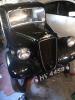
Does anyone have a quick method to remove heavy tarnish from wheel nuts? I have tried Brasso, wire brush and fine sandpaper. All of these are very labour-intensive and slow.
Also I have tried soaking in a solution of baking soda and salt on aluminum foil which made no improvements after an hour of soaking. Perhaps my mixture was too weak - Google didn't tell me how much water to use.
31-12-2025, 01:22 AM (This post was last modified: 31-12-2025, 01:29 AM by Tony Griffiths.)
I find that a wire brush on one end of a double-ended grinder spindle works as well as anything, but here are two AI-derived answers that searched the web for all possible combinations. The first is from Google's Gemini System used on the Chrome Browser (you need the easy-to-obtain Google account), the second is from ChatGPT, both presented as a summary of the results:
1. Gemini
Chemical removal of corrosion from brass (brief guide)
Brass corrosion can be removed chemically, but care is needed to avoid zinc loss (dezincification).
Best methods
Vinegar or lemon juice + salt: For light tarnish. Apply briefly (1–5 min), brush gently, rinse, neutralise with baking soda, dry.
Citric acid solution: For heavier tarnish. Use a weak solution (1–2 tsp per cup of warm water) for under 2 minutes, then rinse and neutralise.
Commercial brass cleaners (examples)
Brasso – traditional polish; mildly abrasive and chemical.
Flitz Brass & Copper Tarnish Remover – liquid, relatively controlled.
Rustins Brass Restorer – common for fittings and hardware.
Antiquax Brass & Copper Polish – decorative/heritage use.
Town Talk Brass & Copper Polish – traditional polish.
Priory Polishes No.1 Brass Cleaning Solution – ammonia-based; effective but for decorative use only.
Always follow instructions exactly and avoid prolonged contact.
Avoid
Hydrochloric or sulfuric acid, bleach, long soaking, ammonia on stressed/antique parts, and electrolysis — all can damage brass.
After cleaning
Rinse thoroughly, dry, and protect with wax, light oil, or lacquer to slow re-tarnishing.
**********************************************************************
2) ChatGPT
Chemical removal of corrosion from brass (brief guide)
Brass corrosion can be removed chemically, but care is needed to avoid zinc loss (dezincification).
Best methods
Vinegar or lemon juice + salt: For light tarnish. Apply briefly (1–5 min), brush gently, rinse, neutralise with baking soda, dry.
Citric acid solution: For heavier tarnish. Use a weak solution (1–2 tsp per cup of warm water) for under 2 minutes, then rinse and neutralise.
Commercial brass cleaners (examples)
Brasso – traditional polish; mildly abrasive and chemical.
Flitz Brass & Copper Tarnish Remover – liquid, relatively controlled.
Rustins Brass Restorer – common for fittings and hardware.
Antiquax Brass & Copper Polish – decorative/heritage use.
Town Talk Brass & Copper Polish – traditional polish.
Priory Polishes No.1 Brass Cleaning Solution – ammonia-based; effective but for decorative use only.
Always follow instructions exactly and avoid prolonged contact.
Avoid
Hydrochloric or sulfuric acid, bleach, long soaking, ammonia on stressed/antique parts, and electrolysis — all can damage brass.
After cleaning
Rinse thoroughly, dry, and protect with wax, light oil, or lacquer to slow re-tarnishing.
I have found that MAAS polish is particularly effective cleaning up tarnished nickel silver; I've not used it on brass but I would expect it to be effective. This is the website for the New Zealand distributor:
The OP's car is a 1938 Ruby. The original wheel nuts would have been chrome plated and must have been replaced. Chrome plating is his way forward surely?
While I quite understand the desire to preserve originality, new brass and stainless repro wheel nuts are available at modest cost 'off the shelf' from our cherished suppliers. I'd choose that option over attempting to re-plate worn nuts, which are only just fit for purpose when in good condition. I replaced mine with nylocs several decades ago after 2 or 3 near misses related to wheels falling off. Keep them in your tool box in case you break a halfshaft.
Given the safety aspect of wheel nuts these do look pretty old anyway and perhaps not as safe/secure as they might be.
I remember when I bought my 7 in a stored for a while but driveable condition, I met Dave Orange of the Essex Club and he said, 'before you drive it anywhere replace all the wheel nuts and the steering arm, then start checking everything else'.
So, personally if I wanted a polished brass look I would discard these, buy new and lacquer them before fitting.
I like originality, but can't see that I will ever make a fuss over a few nuts. Maybe I am aiming at the look of a typical six year old car on my seven. The wheel nuts are a mixture of old chrome, old brass, and a few newish brass. They get checked for tightness, but never get polished.